Model Parts Guide
Hyundai R220LC-9S Electrical Parts Guide
A model-specific RFQ guide for electrical components that can share similar housings but differ internally or at the connector.
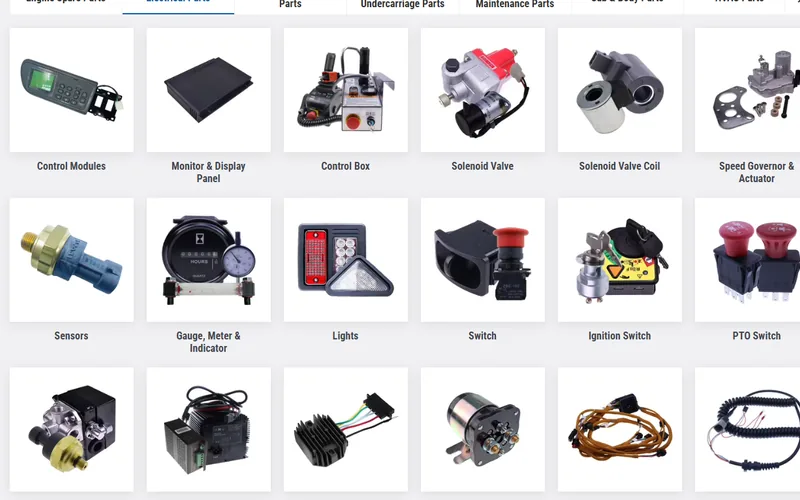
Quick answer
For Hyundai R220LC-9S electrical parts, send the full machine serial number, system voltage, old part label, connector face and pin count, wire colors or harness side, installed position and fault code or symptom. For monitors and controllers, also show every rear connector and software or calibration label. Do not order by housing appearance alone because voltage, pinout and internal function can differ.
Identify sensors and switches by interface and function
Pressure, temperature, speed and position sensors may use similar bodies. Record what the component measures, where it is installed, the old reference and connector arrangement.
Photograph both the component and mating harness plug so keying and pin count can be compared.
- Sensor function and installed location
- Complete label and old reference
- Connector face and keying
- Pin count and wire arrangement
- Fault code and measured symptom
Confirm solenoid voltage and valve configuration
A solenoid request should state whether the need is the coil, cartridge, valve section or complete assembly. Confirm 12V or 24V from reliable machine and part evidence.
Show the connector, coil label, valve body, ports and installation. Similar coils can have different resistance, connector or control characteristics.
- System voltage
- Coil and valve references
- Connector and pin details
- Valve body and port arrangement
- Coil-only or complete-valve scope
Document monitors, controllers and harness parts
Display panels and controllers may depend on serial range, connector count and software calibration. Photograph the front, back, every connector and every label.
Describe the failure behavior and any diagnostic steps. A blank display may involve power, ground or harness faults rather than the panel itself.
- Machine serial range
- Front and rear panel photos
- Controller or monitor label
- All connectors and pin areas
- Power, communication and fault findings
Electrical-part evidence by type
| Part type | Required evidence | Common mismatch |
|---|---|---|
| Sensor | Function, label, plug and installed position | Same thread with different signal range |
| Solenoid | Voltage, coil code, connector and valve body | 12V/24V or coil-only scope |
| Monitor | Front, rear, labels and connectors | Different serial range or software |
| Controller | Complete label, machine serial and plugs | Calibration or connector difference |
| Harness part | Both mating connectors, length and branch layout | Pinout or branch configuration |
Buyer checklist before requesting a quote
- Full R220LC-9S model and serial are included
- Voltage comes from reliable evidence
- Label and connector face are sharp
- Installed position and function are stated
- Fault codes and checks are recorded
- Coil, valve, monitor or controller scope is clear
Frequently asked questions
Can two identical-looking sensors have different outputs?
Yes. Thread, pressure range, signal type or connector pinout can differ even when the housing looks similar.
Is a fault code enough to order a controller?
No. Diagnose power, ground, communication, sensors and harnesses, then identify the controller by label and machine configuration.
Why show the mating harness connector?
It helps confirm keying, pin positions and wire arrangement, especially when the old part is damaged.