
EXCAVATOR SPARE PARTS BUYING GUIDE
Excavator spare parts should be selected from evidence, not appearance alone. The strongest enquiry combines the complete part number, machine model, serial information, application and clear photos. TOP Excavator Parts uses those details to identify candidates and document unresolved fitment questions before quotation.
Include every letter, digit, dash and suffix visible on the label or catalog.
Provide the excavator model, serial range and engine model when available.
State whether you need a complete assembly, repair component, seal kit or service part.
Compare labels, ports, connectors, shafts, dimensions and mounting points when relevant.
Excavator spare parts examples
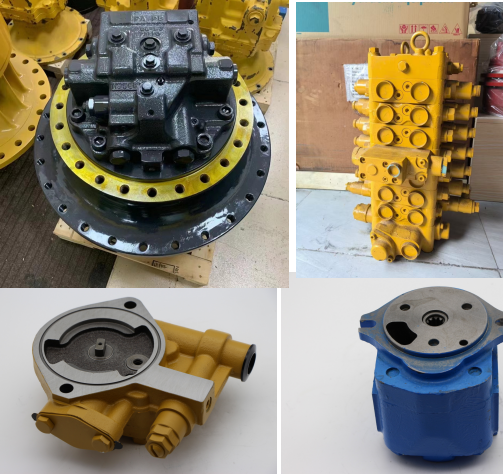
What counts as excavator spare parts?
Excavator spare parts include replacement components used to maintain or repair the engine, hydraulic, electrical, travel, swing, undercarriage, cooling, cab and attachment systems. The same model family may use different parts across production years, serial ranges or engine configurations, so the model name alone is rarely enough for a reliable match.
Common spare-parts groups
- Engine parts, fuel-system components, turbochargers, cooling parts and service items
- Hydraulic pumps, motors, control valves, cylinders, seal kits and related components
- Travel motors, final drives, swing motors, swing gearboxes and drivetrain parts
- Controllers, monitors, joysticks, sensors, switches, solenoids and wiring harnesses
- Track rollers, carrier rollers, idlers, sprockets, pins, bushings and wear parts
Information required for an accurate quotation
- Complete part number: photograph the full label and type the reference in the enquiry.
- Machine data: send the brand, model, serial number and engine model.
- Actual-part photos: show the complete component and important interfaces.
- Required quantity: list each reference and quantity on a separate line.
- Destination country: this is required to prepare order-specific shipping options.
A visual similarity is identification evidence, not a fitment guarantee. When the part number cannot be confirmed, dimensions and physical interfaces should be documented before purchase.
How overseas buyers can reduce wrong-part risk
Begin with the old part and machine data, then compare the available replacement against the original label, mounting pattern and functional interfaces. Do not combine unresolved alternatives into one confirmed line item. If two candidates remain, ask the supplier to state exactly which evidence is still missing.
Common buying mistakes
- Searching with only a machine model and ignoring serial or engine differences
- Sending a partial reference that omits an important suffix
- Assuming used, tested, repaired and rebuilt describe the same condition
- Ordering a complete assembly when only a subcomponent is required
- Comparing quotations that cover different brands, conditions or component scopes
Prepare your excavator spare-parts enquiry
Send a line-by-line list with part numbers, machine references, quantities and destination. Sofia and the TOP Excavator Parts team will review the available evidence and confirm quotation details for the specific enquiry.
Search the excavator parts catalog Use the part-number guide Browse parts categories Request a quotation
Excavator spare parts FAQ
Can a supplier identify a part from a photo?
Photos can narrow the candidates, but the complete part number and machine data provide stronger evidence. Important physical details should be compared when the reference remains uncertain.
Can different brands and systems be combined in one enquiry?
Yes. Use one line per part number and state the acceptable brand or condition for every item so each line can be reviewed separately.
Are all listed parts always in stock?
No. Availability changes by reference and quantity. Current stock or sourcing status is confirmed after the complete enquiry is reviewed.
How to compare spare-parts quotations
Place the requested and offered references beside each other and compare the stated brand, condition, included scope, quantity, lead time and trade term. A cheaper line may exclude a regulator, sensor, seal kit, attachment or packing requirement included elsewhere. Mark every offered alternative separately and ask what evidence supports the substitution.
For a mixed list, keep four statuses: confirmed, alternative offered, waiting for evidence and unavailable. This makes the quotation easier to approve and prevents an unresolved reference from being treated as a confirmed match.