HYDRAULIC PUMP IDENTIFICATION
An excavator hydraulic pump must be matched by more than machine model or external shape. Confirm the complete pump or regulator reference, excavator model, serial information, drive shaft, ports, controller or solenoid configuration and required scope before quotation.
Confirm whether the enquiry covers the complete main pump with regulator and attached components.
Rotating groups, valve plates, pistons and other internals must match the exact pump series.
Controllers, solenoids and regulators can differ even when the pump housing looks similar.
A seal kit should be matched to the pump reference and configuration, not only the excavator model.
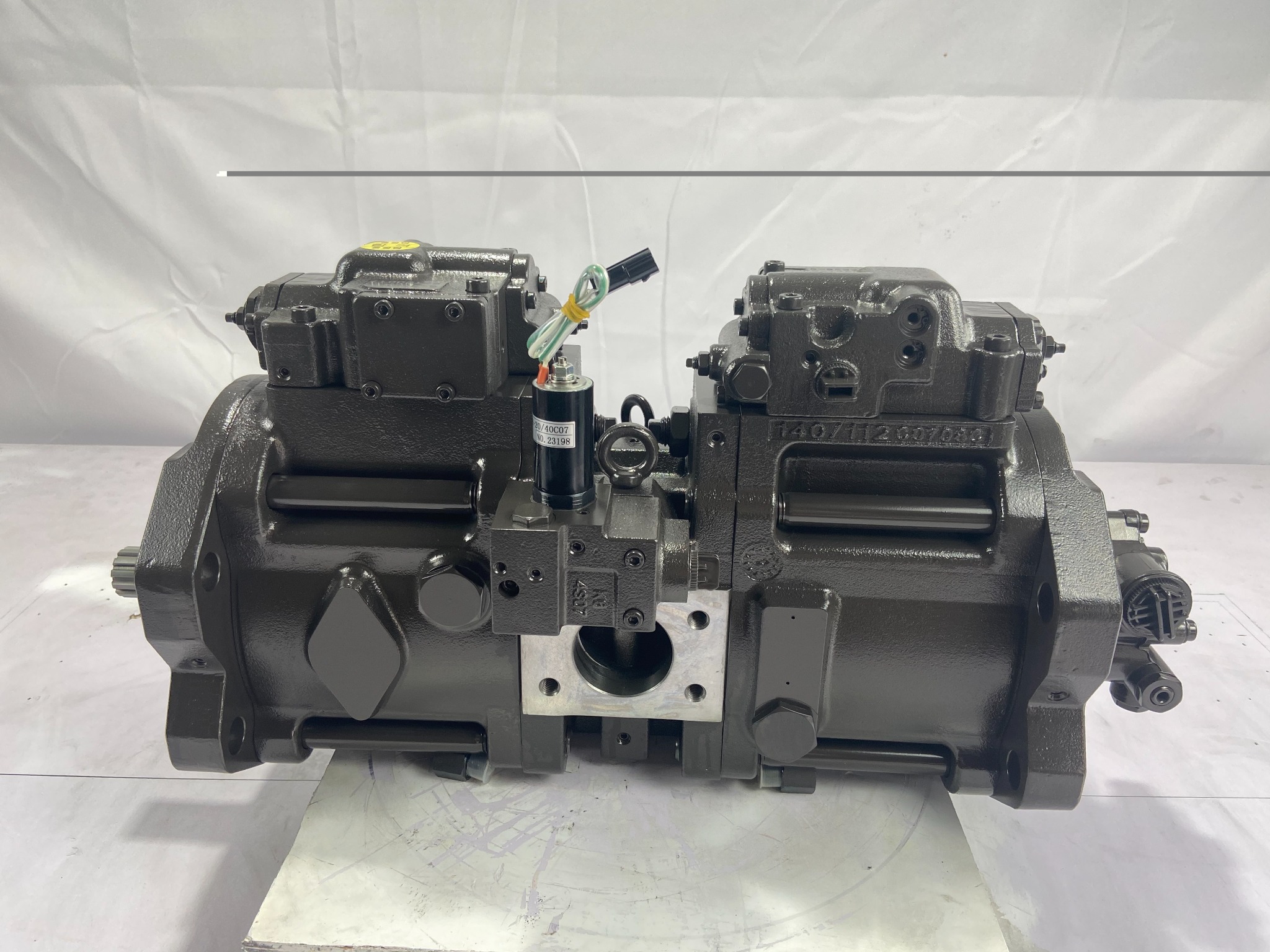
Excavator hydraulic main pump example
How to identify the correct excavator hydraulic pump
- Photograph the pump nameplate. Capture the manufacturer, model code and complete reference.
- Record machine information. Provide brand, model, serial number and engine model.
- Define the required scope. State complete pump, pump section, regulator, gear pump, repair parts or seal kit.
- Show the drive and interfaces. Photograph the shaft or coupling, mounting flange, ports, hoses and attached controls.
- Describe the fault separately. A symptom can support diagnosis, but it does not prove which component has failed.
Details that commonly create fitment differences
- Pump series, displacement and rotation direction
- Input shaft or spline count and coupling design
- Mounting flange and bolt-hole pattern
- Main and pilot port sizes and positions
- Regulator, controller, sensor and solenoid configuration
- Single, tandem or multi-section arrangement
Complete pump, pump parts or seal kit?
A complete hydraulic pump enquiry should not be quoted as a repair-parts enquiry, and a seal kit cannot be selected from the excavator model alone. If the internal damage has not been inspected, ask the repair workshop to define whether the requirement is a full replacement, a pump section, rotating group, regulator or sealing components.
Symptoms are not part numbers
Weak digging power, slow functions, abnormal noise, overheating, leakage and unstable operation can have several causes. Oil condition, filters, suction restrictions, relief settings, control signals, cylinders, motors and valves may affect the same system. Diagnostic information is useful, but the replacement component still requires independent identification.
Before approving a hydraulic-pump quotation
- Confirm the quoted brand and condition
- Compare the full pump reference and suffix
- Verify included regulators, sensors, solenoids and gear-pump sections
- Check whether seals, couplings or mounting parts are included
- Document any fitment point that remains unresolved
Request an excavator hydraulic pump quotation
Send the pump label, machine model, serial information, photos of the shaft, ports and regulator, required quantity and destination country.
Browse hydraulic parts Review hydraulic-pump fault information Verify the part number Request a quotation
Excavator hydraulic pump FAQ
Can I order a pump using only the excavator model?
Usually not with sufficient confidence. Production ranges can use different pump references and control configurations. Send the pump label and machine serial data.
Are pump parts interchangeable between similar pump series?
Do not assume interchangeability. Internal dimensions, materials, control settings and revisions can differ.
Can you quote a seal kit from a photo?
A photo helps, but the pump reference and exact configuration are normally required to identify the correct kit.
What a hydraulic-pump quotation should state
The quotation should identify the offered pump reference, brand, condition and included configuration. Ask whether the regulator, controller, solenoids, sensors, gear-pump section, coupling, seals and fittings shown in the photos are included. For repair parts, request the exact pump series and component list rather than a general repair-kit description.
When an alternative reference is proposed, require a written comparison of the original and offered units. The supplier should identify which label, shaft, flange, port and control details have been confirmed and which still require evidence.