
FINAL DRIVE IDENTIFICATION GUIDE
An excavator final drive can mean the complete travel-drive assembly, hydraulic travel motor, reduction gearbox or selected repair parts. Define the exact scope first, then compare the part number, machine data, mounting, ports, shafts and sprocket interface.
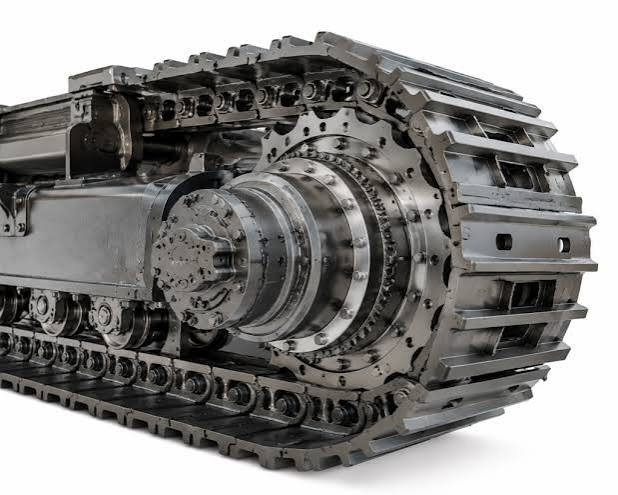
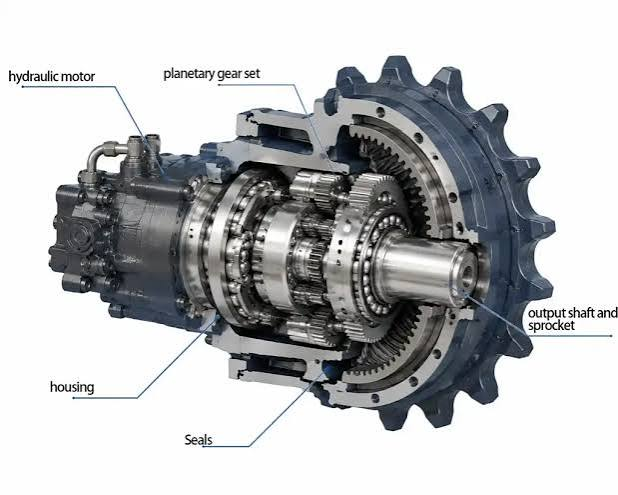
Hydraulic motor and reduction gearbox supplied as one matched assembly.
Hydraulic motor section with ports, brake and control configuration.
Planetary drive section that converts motor speed into track-driving torque.
Gears, carriers, shafts, bearings, seals and related parts require exact unit identification.
Excavator final drive assembly and internal structure
Information required to match an excavator final drive
- Complete final-drive or motor reference: send all visible numbers and suffixes.
- Machine model and serial number: the same model family can use several drive configurations.
- Full-unit photos: show both sides, mounting flange, sprocket side and cover.
- Hydraulic interfaces: show main ports, drain, speed-change and brake connections.
- Mechanical interfaces: compare flange diameter, bolt pattern, shaft or spline and sprocket mounting.
Fitment points that should be compared
- Motor and gearbox reference numbers
- Mounting-flange diameter and bolt-hole count
- Sprocket bolt pattern and pilot diameter
- Hydraulic port position, thread and control configuration
- Overall dimensions and cover profile
- Reduction ratio when a gearbox or complete assembly is involved
Why appearance alone is unreliable
Two final drives can share a similar housing but use different motor displacements, control valves, brake arrangements, shafts, reduction ratios or mounting patterns. A small interface difference can prevent installation or produce incorrect travel performance.
Replacement scope and condition
State whether you require replacement, aftermarket, used or another acceptable condition. For used inventory, request actual-item photos and clarify what has and has not been checked. A used unit should not be described as tested, repaired or rebuilt unless that status is supported for the specific item.
Common final-drive ordering mistakes
- Using only the excavator model without serial or part-number evidence
- Confusing a travel motor with a complete final-drive assembly
- Ignoring sprocket mounting or hydraulic port differences
- Assuming two gearbox ratios are interchangeable
- Comparing quotations with different included components
Request a final-drive quotation
Send the complete reference, machine model, serial information, quantity and clear photos of both sides, ports, flange and sprocket interface.
Browse transmission and undercarriage parts See a model-specific final-drive guide Verify the reference Request a quotation
Excavator final drive FAQ
Is a final drive the same as a travel motor?
Not always. Some buyers use the terms interchangeably, but a complete final drive normally includes both the hydraulic motor and reduction gearbox.
Can a gearbox be matched without the motor number?
Sometimes, but both motor and gearbox information provide stronger evidence because the two sections must work as a matched configuration.
Do I need the reduction ratio?
It is important when replacing a gearbox or complete assembly. If the ratio is not documented, provide the full references and physical details for review.
Questions to ask the final-drive supplier
Ask whether the quotation covers the motor, gearbox or complete assembly; whether the sprocket-side hub, cover, valves and fittings are included; and whether the offered unit is replacement, aftermarket or used. The supplier should also state the reference used for matching and any remaining uncertainty.
If one side of the machine still operates, record its reference and external configuration. It can provide useful comparison evidence, although left-right interchangeability should never be assumed without checking the machine and unit data.
Final-drive evidence for a claim
If a supplied unit appears different or develops a problem, stop installation or operation when further damage is possible. Keep the packaging, label, quotation and pre-installation photos. Record the machine data, installation date, operating hours, oil details and a clear description of the symptom. This evidence helps separate transport damage, identification issues, installation problems and later operating faults.