Troubleshooting & Maintenance
Excavator Engine Service Parts Checklist
A maintenance and fleet-stock checklist for routine service, cooling, fuel, repair and engine electrical parts.
Quick answer
Organize engine service parts by service interval and engine system. Record the excavator model and serial number, engine model and serial, old filter or part references, operating hours and planned quantity. Separate routine filters and belts from cooling, fuel, gasket and electrical repair parts, because each group requires different identification evidence and replacement planning.
Plan routine service by hours and environment
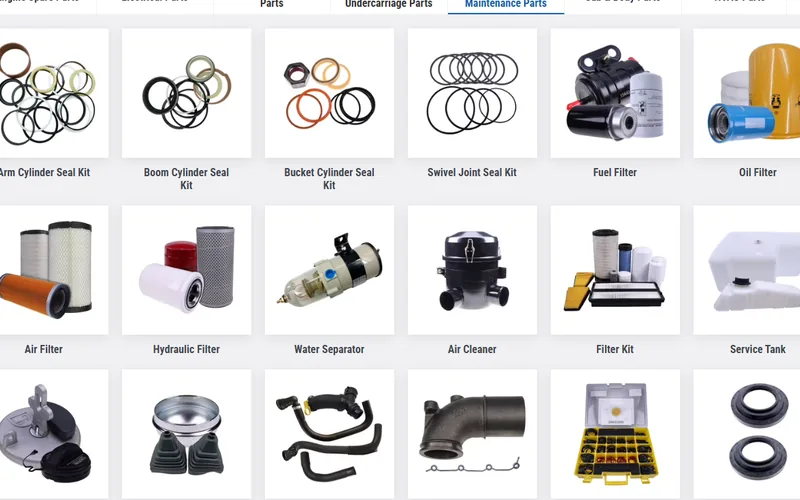
Oil, fuel and air filter intervals depend on manufacturer guidance, oil specification, fuel quality, dust and workload. A fleet plan should use actual operating hours rather than calendar dates alone.
Keep old filter references and dimensions, but verify them against the installed engine and filter housing before bulk ordering.
- Oil and fuel filters
- Primary and safety air elements
- Water separator elements
- Belts and tension items
- Service hours and site conditions
Identify cooling and fuel parts precisely
Water pumps, thermostats, injectors and fuel pumps can vary by engine specification. Include the complete engine model and serial together with the machine serial number.
For pumps and injectors, photograph labels, connectors, ports and mounting. Describe leakage, overheating, smoke, starting or performance symptoms without assuming the failed part.
- Engine model and serial plate
- Water pump and thermostat references
- Injector or fuel-pump numbers
- Hose and connection layout
- Observed symptoms and diagnostic findings
Separate overhaul parts from maintenance stock
Gasket kits, pistons, liners, bearings and cylinder-head parts belong to a defined repair scope. State whether the engine will receive an in-frame repair, major overhaul or one-component replacement.
For sensors, relays and switches include voltage, connector and old label photos. Do not mix overhaul quantities with routine service consumption in one unmarked list.
- Repair scope and engine condition
- Gasket set type and included pieces
- Electrical voltage and connector
- Immediate repair versus reserve stock
- Required delivery date and destination
Engine parts planning groups
| Group | Typical items | Identification basis |
|---|---|---|
| Routine service | Oil, fuel and air filters; belts | Engine identity, old numbers and service interval |
| Cooling | Water pump, thermostat, hoses and fan items | Engine code, mounting and connection photos |
| Fuel | Injectors, pumps and sensors | Part labels, engine serial and symptoms |
| Repair | Gaskets, pistons, liners and bearings | Exact overhaul scope and engine specification |
| Electrical | Sensors, relays, switches and harness items | Voltage, connector and old reference |
Buyer checklist before requesting a quote
- Machine and engine identities are both recorded
- Operating hours and service interval are known
- Old filter and part references are retained
- Cooling and fuel symptoms are described
- Repair scope is separated from service stock
- Electrical voltage and connectors are shown
Frequently asked questions
Is the excavator model enough for engine parts?
Not always. The installed engine model, serial number and old-part reference provide more precise matching.
Can filters be ordered from dimensions only?
Dimensions help, but thread, sealing, bypass and filtration specifications also matter. Use verified references and engine application.
How should a fleet set quantities?
Use operating hours, service intervals, machine count, historical failures, lead time and a controlled safety-stock policy.