Model Parts Guide
CAT 320D Common Replacement Parts Buying Guide
Organize common CAT 320D engine, hydraulic, electrical, undercarriage and wear-part inquiries by system and replacement priority.
Quick answer
A CAT 320D parts request should be organized by system and verified with the machine serial number. Commonly sourced groups include filters and engine service parts, hydraulic components, sensors and solenoids, undercarriage wear parts, bucket wear parts and cab items. The exact reference still depends on machine configuration and component data.
Engine and routine service parts
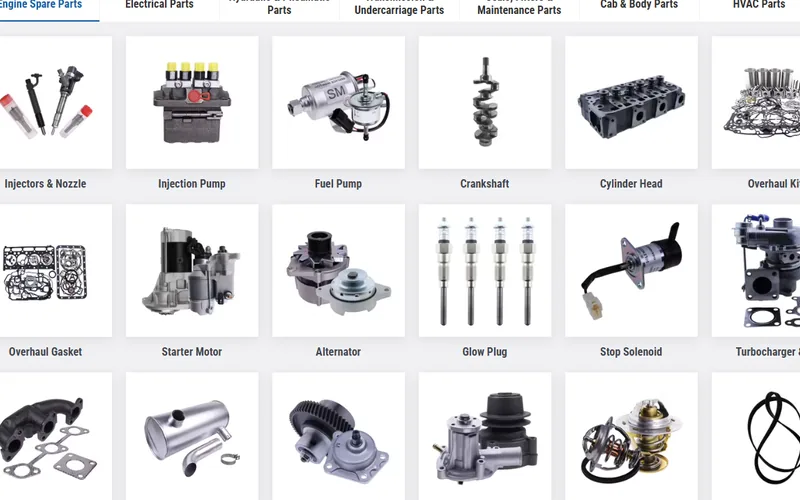
Service demand often includes oil, fuel, air and hydraulic filters, belts, water pumps, injectors, sensors, gaskets and cooling parts. Start with the engine model and machine serial number, then add the old part reference for every line item.
For a fleet order, list quantities per machine and planned service interval. This helps separate immediate repair parts from scheduled-maintenance stock.
- Engine model and serial information
- Filter numbers currently installed
- Service interval or required stock period
- Quantity per machine and number of machines
Hydraulic, electrical and control components
Hydraulic-pump, motor and valve quotations require component labels and configuration photos. Electrical parts such as sensors, pressure switches, speed sensors, solenoids, controllers and monitors require voltage and connector details.
A fault code is useful diagnostic context, but it is not always a part number. Send the old part label and plug photos rather than ordering from a fault code alone.
- Hydraulic component nameplate
- Sensor or solenoid part number
- Voltage, plug shape and pin count
- Fault symptom and diagnostic results
Undercarriage and bucket wear parts
Track rollers, carrier rollers, idlers, sprockets, track chains and shoes should be checked as a system. Uneven wear can shorten the life of new components if related parts are not inspected.
Bucket teeth, adapters, side cutters and cutting edges require bucket photos and wear-system identification. Measurements and mounting details help when the reference is missing.
- Track shoe width and chain configuration
- Roller, idler or sprocket reference when visible
- Bucket width and tooth-system photos
- Current wear pattern and job-site conditions
Build a clear multi-item RFQ
Use one spreadsheet line for each requested item with part name, reference, quantity, machine serial number and photo filename. Avoid sending a folder of unlabeled photos that the supplier must guess.
Mark urgent downtime items separately from replenishment stock. Also state the destination city and preferred shipping method so packing and freight options can be discussed early.
- One part per RFQ line
- Match every photo to a line number
- Separate urgent and stock orders
- State destination and target delivery timing
Typical CAT 320D sourcing groups
| System | Example requests | Key matching data |
|---|---|---|
| Engine/service | Filters, water pump, injectors, belts, gaskets | Engine model, machine serial and old number |
| Hydraulic | Pump, motor, valve, cylinder and seal kit | Nameplate, configuration and function |
| Electrical | Sensor, solenoid, controller and monitor | Part number, voltage, plug and pin layout |
| Undercarriage/wear | Rollers, chain, sprocket, teeth and adapters | Serial number, dimensions and installation photos |
Buyer checklist before requesting a quote
- CAT 320D serial-number plate
- Engine model for engine-related lines
- One reference and quantity per RFQ line
- Photos named to match RFQ line numbers
- Urgency and acceptable quality level
- Destination and preferred shipping method
Frequently asked questions
Can I order CAT 320D parts using the model only?
The serial number and old component reference are strongly recommended because specifications can differ within the model family.
Should a fleet RFQ include each machine serial number?
Yes when the fleet contains different production ranges or configurations. Group identical machines only after verifying they use the same parts.
Is a fault code the same as a part number?
No. A fault code identifies a diagnosed condition or circuit; the replacement component still needs its own reference and configuration check.