Troubleshooting & Maintenance
Hydraulic System Maintenance Parts Checklist
A system-level checklist for planning hydraulic maintenance parts without confusing a symptom with a confirmed failed component.
Quick answer
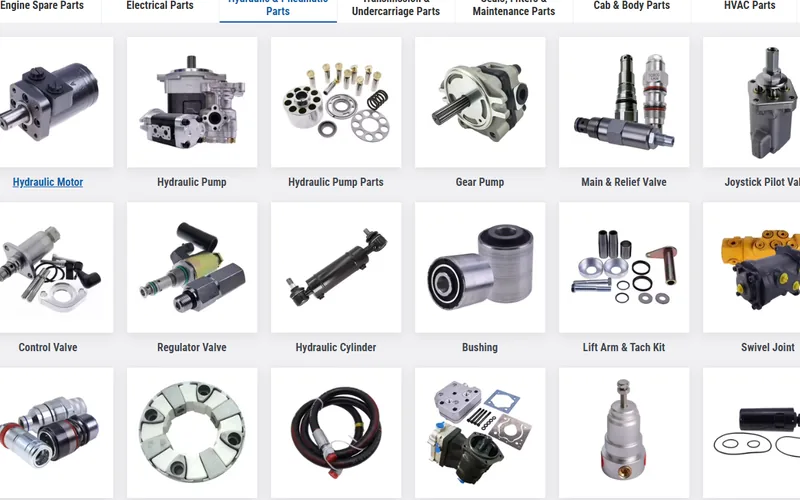
Build a hydraulic maintenance list by system function: oil and filtration, pump and control, motors and drives, cylinders and seals, hoses and sensors. Record symptoms, pressure or temperature findings and contamination evidence before ordering a major assembly. For each part, include the machine serial number, assembly nameplate, old reference, configuration photos, quantity and whether you need a complete unit or repair parts.
Start with oil condition and filtration
Low oil level, incorrect viscosity, blocked filtration and contamination can cause heat, noise and weak operation that resemble component failure. Record oil appearance, service hours, filter condition and any metal particles before dismantling.
Plan suction, return, pilot and case-drain filtration according to the machine system rather than treating every filter as interchangeable.
- Hydraulic oil grade and service history
- Tank breather and suction condition
- Return, pilot and case-drain filters
- Oil cooler and temperature behavior
- Contamination findings
Separate pumps, valves and actuator symptoms
If all functions are weak, investigate pump supply, engine speed and main pressure. If one function is affected, the fault may be in one valve section, cylinder, motor or pilot circuit.
State the affected function and cold-versus-hot behavior. A complete pump, regulator, solenoid, seal kit and internal repair kit are different quotation scopes.
- Pump and regulator identity
- Main and pilot valve sections
- Travel and swing motors
- Boom, arm and bucket cylinders
- Pressure sensors and solenoids
Prepare parts data before planned maintenance
Photograph nameplates before cleaning or dismantling removes evidence. For cylinders, identify the exact position and provide the cylinder reference or dimensions required for the seal kit.
For hoses and fittings, record port type, length, pressure class and routing. Do not order from appearance alone when thread standards may differ.
- Machine and assembly serial data
- Complete-unit or repair-parts scope
- Port, shaft, flange and connector photos
- Cylinder position and dimensions
- Quantity and planned maintenance date
Hydraulic maintenance groups
| System group | Typical parts | Evidence to collect |
|---|---|---|
| Oil and filtration | Oil, filters, breather and cooler items | Service hours, oil and filter condition |
| Pump and control | Pump, regulator, valve and solenoids | Nameplates, pressure findings and configuration |
| Motors and drives | Travel and swing motors | Symptoms, labels, ports and gearbox condition |
| Cylinders and seals | Cylinders, seal kits and bushings | Position, cylinder number and leakage |
| Hoses and sensing | Hoses, fittings, sensors and switches | Threads, length, voltage and connectors |
Buyer checklist before requesting a quote
- Symptoms are recorded before parts are selected
- Oil and contamination condition are checked
- Machine and assembly identities are included
- Complete assembly versus repair scope is clear
- Ports, connectors and mounting are photographed
- Maintenance quantity and timing are stated
Frequently asked questions
Does weak hydraulics always require a new pump?
No. Oil supply, engine speed, valves, cylinders, motors and control signals can create similar symptoms.
What information is needed for a cylinder seal kit?
Identify the cylinder position and provide the cylinder number or reliable rod, bore and seal details as requested.
Can hydraulic hoses be matched from length alone?
No. Port type, thread, pressure rating, diameter, orientation and routing also matter.